
Treasury in the Munich Residence
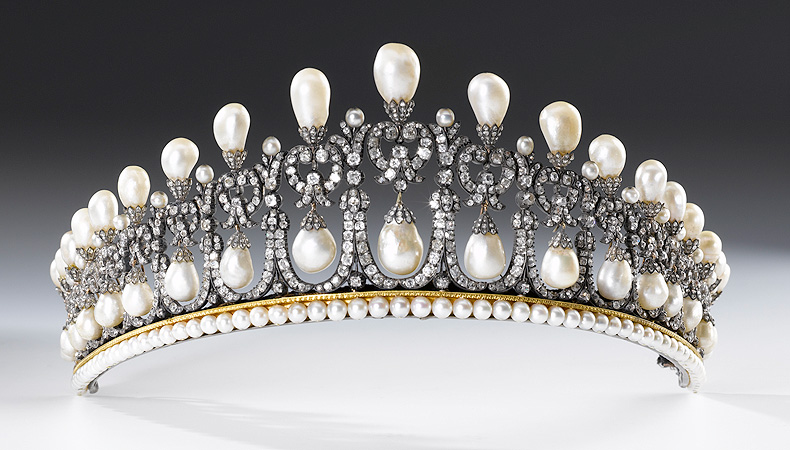
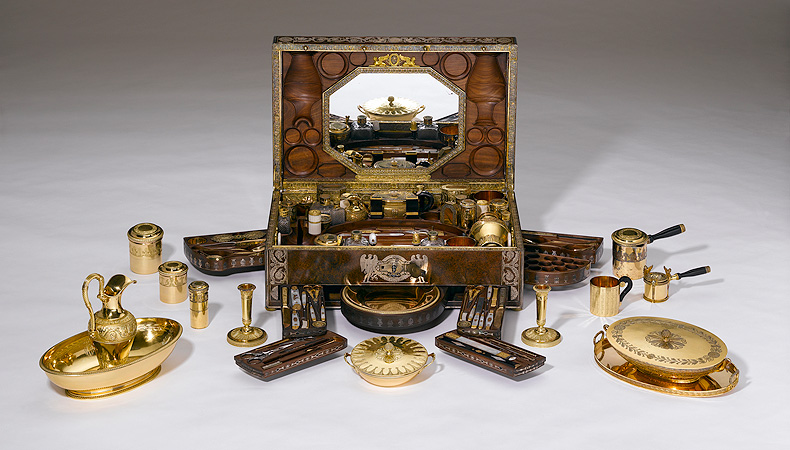
The display of jewels, goldsmith's work, enamels, crystal objects and ivories in the Treasury of the Munich Residence is the result of centuries of avid collecting by the rulers of Bavaria. In his will of 1565 Duke Albrecht V stipulated that particularly valuable ‘hereditary and dynastic jewels’ be united to form an unsaleable treasure.
Established in this way by the Wittelsbach family's first great patron and collector of art, the treasure was expanded by his son, Duke Wilhelm V, and by his grandson, Elector Maximilian I, and was maintained by Electors Maximilian Emanuel, Karl Albrecht und Maximilian Joseph III. Elector Karl Theodor enlarged the treasure in the late 18th century by transferring the treasure of the Palatine Wittelsbachs to Munich.
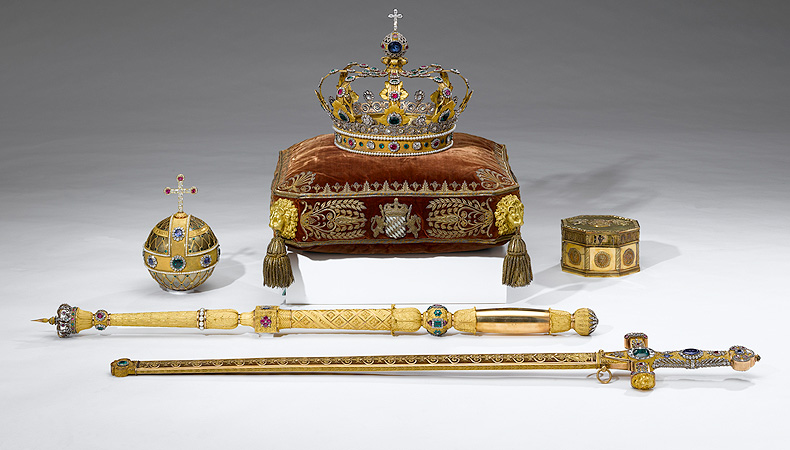
The treasure reached its full extent in the early 19th century, with the addition of the royal insignia of the newly created Kingdom of Bavaria and of several outstanding medieval works of art acquired as a result of the confiscation of church property in 1803.
Alongside this profane treasure the Munich Residence also possessed valuable liturgical implements and relics (housed in containers known as reliquaries). This sacred treasure had been acquired in the early 17th century by Wilhelm V and Maximilian I for the Court Chapel in the Residence. Like the profane treasure, it was maintained by successive Wittelsbach rulers and expanded in the early 19th century by examples of the medieval goldsmith's art confiscated from the Church. Some works in this collection were transferred to the Treasury in 1958.
The Treasury in its present form is located in ten rooms on the ground floor of the Royal Palace.
Address
Residenzstraße 1
80333 München
089 29067-1
www.residenz-muenchen.de
Opening hours
28 March-19 October:
9 am-6 pm (last entry: 5 pm)
20 October-27 March:
10 am-5 pm (last entry: 4 pm)
Open daily
Closed on: January 1, Shrove Tuesday, December 24/25/31
Guided tours
Free audio guide available in German, English, Italian, French, Spanish, Russian, Chinese, Japanese and Arabic
Admission fees 2026
10 euros regular
9 euros reduced
Combination ticket
(Residence Museum + Treasury)
15 euros regular
13 euros reduced
Combination ticket
(Residence Museum + Treasury + Cuvilliés Theatre)
20 euros regular
16 euros reduced
Tickets for the Munich Residence are also available online in our ticket shop.
Children under 18 are admitted free of charge.
Accessibility
Getting here / parking
Munich
www.bahn.com
Underground / Suburban railway to 'Marienplatz' or 'Odeonsplatz'
Bus to 'Odeonsplatz',
tram to 'Nationaltheater'
Underground parking at 'Max-Joseph-Platz'
Further information
Service (leaflets, photo/film, links…)
Shop
www.kulturgut.de
Pfälzer Residenzweinstube
089 225628
www.pfaelzerweinstube.de
Frank Weinbar
Residenzstraße 1
089 23237492,
www.frank-weinbar.com
Schumann's Bar am Hofgarten
Odeonsplatz 6/7
089 229060
www.schumanns.de
Administrative office
Verwaltung der
Residenz München
Residenzstraße 1
80333 München
089 29067-1
Fax 089 29067-225
ResidenzMuenchen@ bsv.bayern.de
www.residenz-muenchen.de
